Apple Tree Training and Pruning Guide: Maximize Fruit Yield
Apple Tree Training and Pruning Guide: Maximize Fruit Yield
Transparency Disclosure: This article is prepared using authentic, verified sources to ensure accuracy and reliability. This post also contains affiliate links. If you make a purchase through them, we may earn a small commission at absolutely no extra cost to you. As an Amazon Associate, I earn from qualifying purchases.
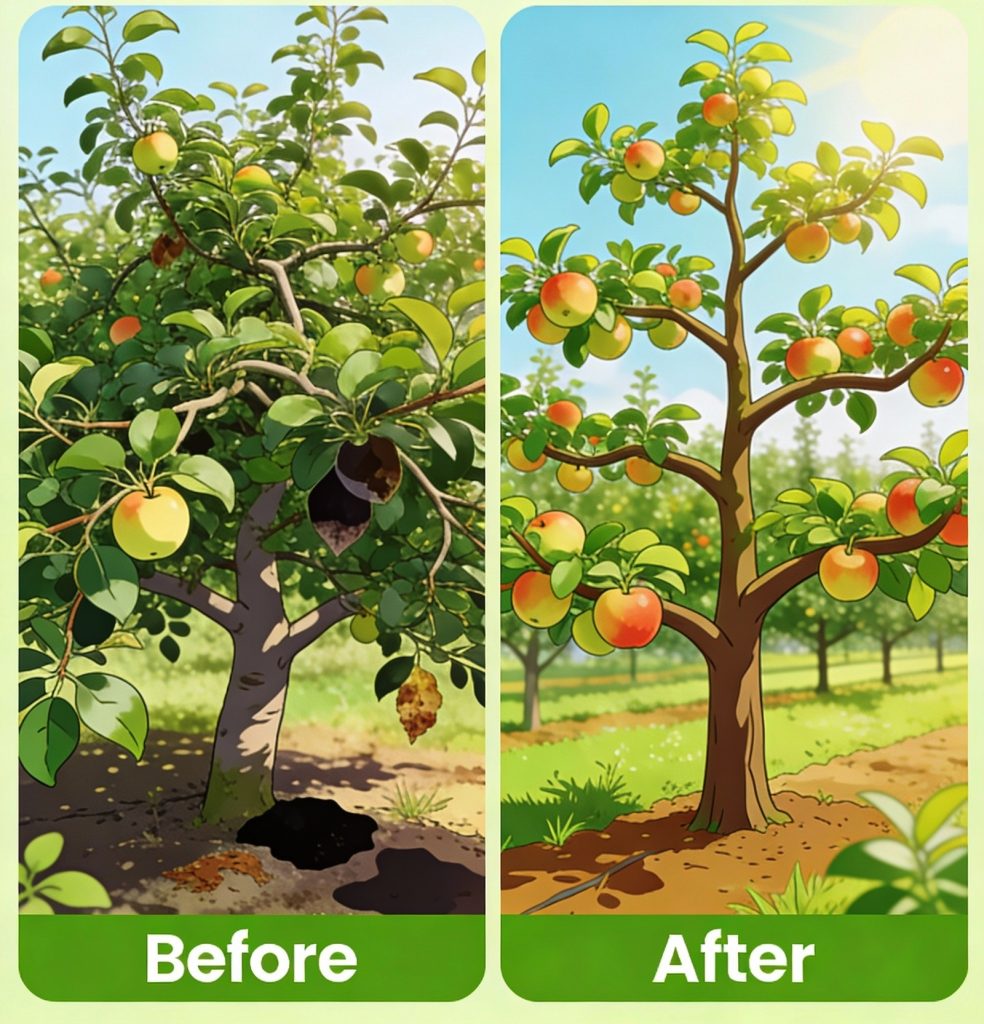
WHAT IS DIFFERENCE BETWEEN TRAINING AND PRUNING?
- Training means to give a proper shape to a plant by cutting its parts, so that it could bear heavy crop load.
- Pruning means cutting the part of plants to get the better and quality yield.
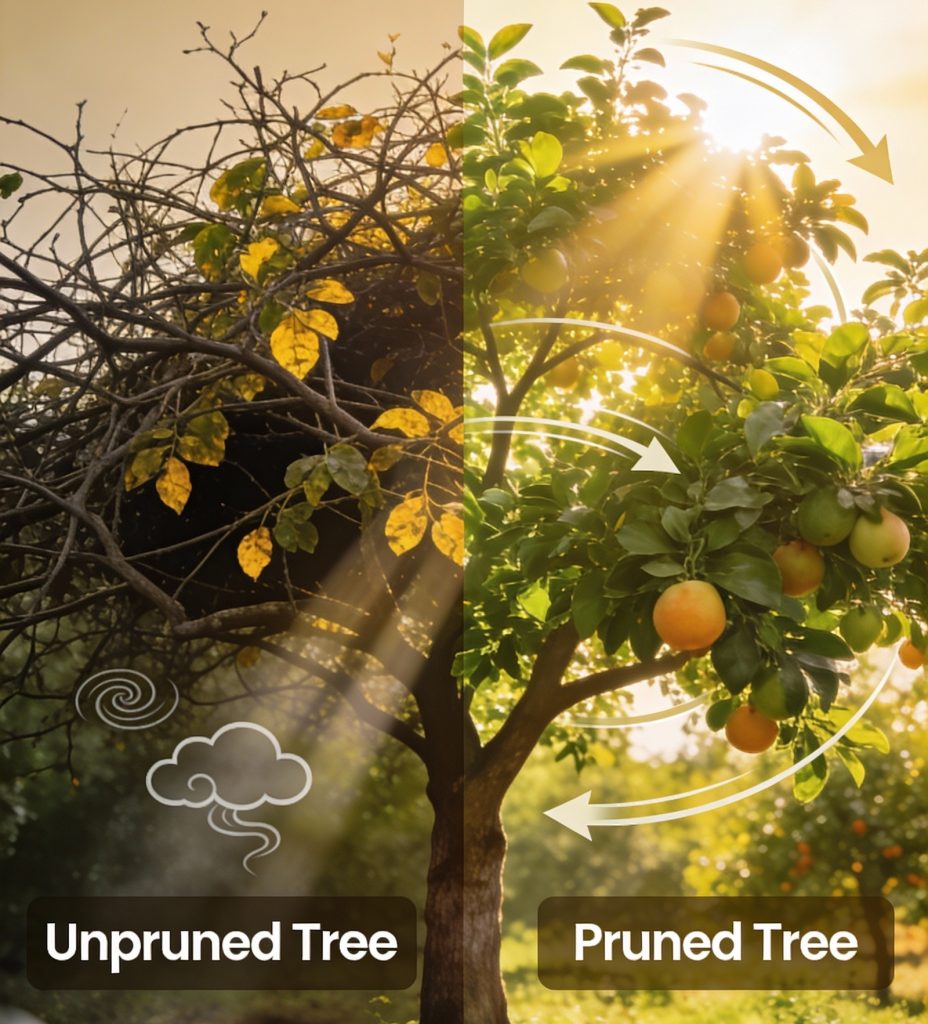
WHY TRAINING AND PRUNING IS IMPORTANT?
-
-
- Strong Framework
- Control and regulate tree size & shape
- Better crotch angle in branches
- Deep penetration of sunrays into the plant
- Dead, diseased, broken branches & Water sprout removal
- Balance between vegetative and reproductive growth.
- Stimulate fruiting and flowering.
-
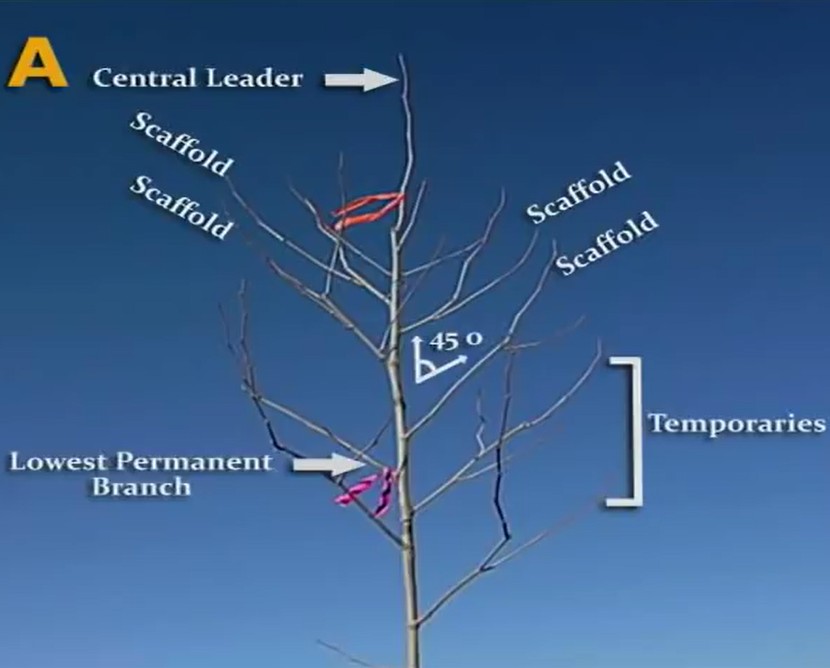
TRAINING SYSTEM IN APPLE
- Modified Central leader System
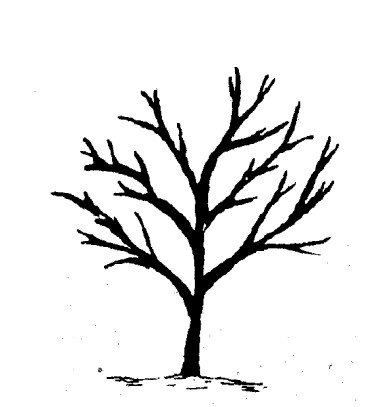
TIME OF TRAINING & PRUNING
- The training and pruning is done when Plant is dormant i.e. December and January
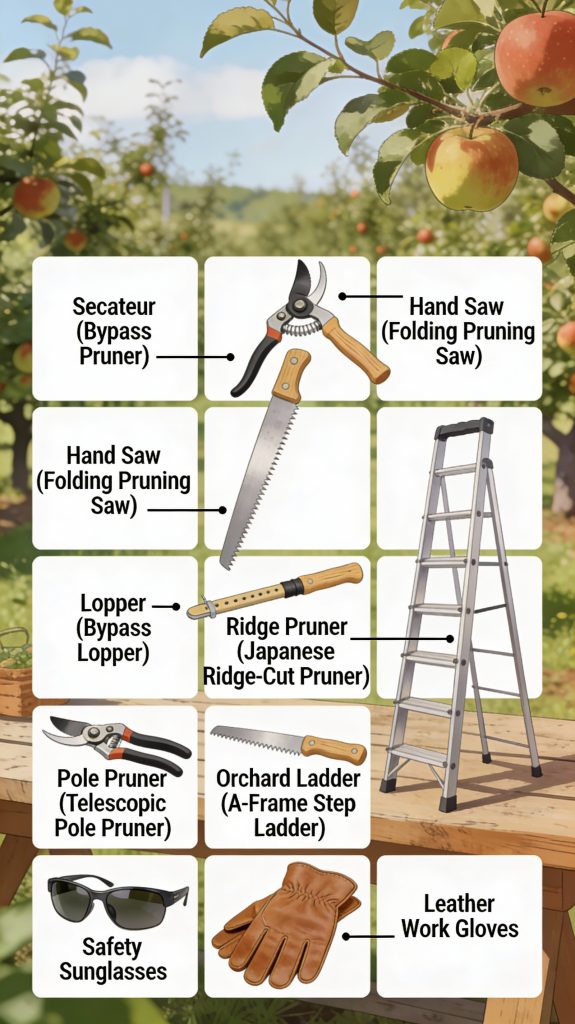
WHAT ARE THE EQUIPMENTS?
-
-
- Secateur :- To cut 1 inch thick branches.
- Hand Saw :- For Several inches wide branches.
- Lopper:- To prune larger branches, good for precision work.
- Ridge Pruner :- To cut tall branches 10-15 feet above the ground.
- Pole Pruner: To cut the 1- 1.5 inch thick branches upto 6 to 12 Feet above the ground.
- Ladder: Use the ladder when ground is flat.
- Sun Glasses: To protect eyes.
- Gloves : For safety of hands.
-
WHAT DOES A WELL-TRAINED TREE LOOK LIKE?
-
-
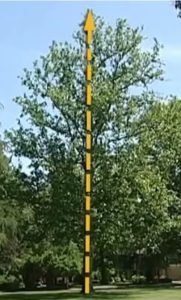
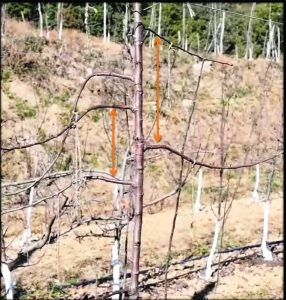
- A well trained tree has single upright Central Leader and well spaced schhfold branches.
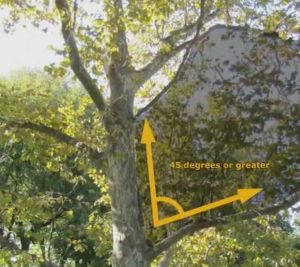
- The branches have wide and strong 45 degree angle to the attachment and not too large compare to the trunk.
- When all branches of the tree are attached to a same point in a tree, the overall structure is weak and more likely to breakage.
- When Branch angle is less than 45 degree to the main stem, these are more likely to breakage.
-
GENERAL PRINCIPLES OF TRAINING AND PRUNING
The fruit comes on one year old shoot.
- Ideally, begin Training and Pruning a tree after one year of Planting, if you miss first year, Start immediately as soon as possible.
- Main time of pruning is in winter, when plant is in dormant Stage.
- Summer Pruning generally slows tree growth.
- Pruning’s General 1/3 Rule:- Avoid pruning more than 1/3 of the tree or shrub at one time.
- Use proper pruning cut make your plant healthier and productive.
- Bordeaux paste should be applied after pruning to avoid disease infection.
- Crowded, diagonally crossed, dead, diseased, broken branches & Water sprouts should be removed.
- Completely remove those branches where width of branch is half to the main stem.
KNOW ABOUT THE BUDS
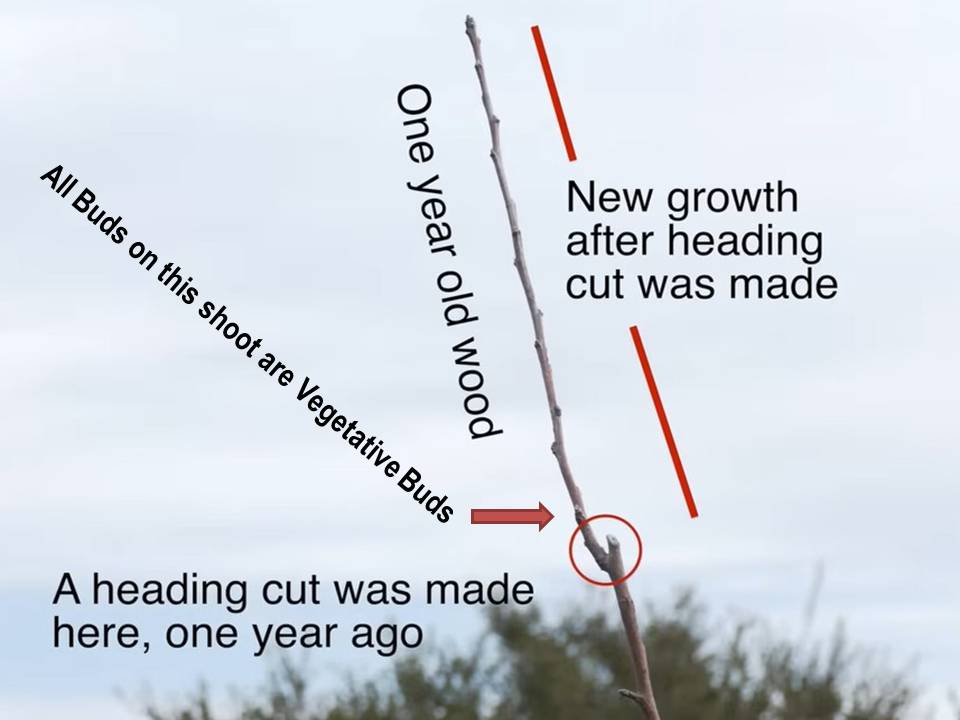
- Vegetative Buds:- These are pointed, slender and clasped tight to the stem. All the buds on the new one year growth are vegetative buds.
- One year old wood is thinner, bronzier and livelier looking.
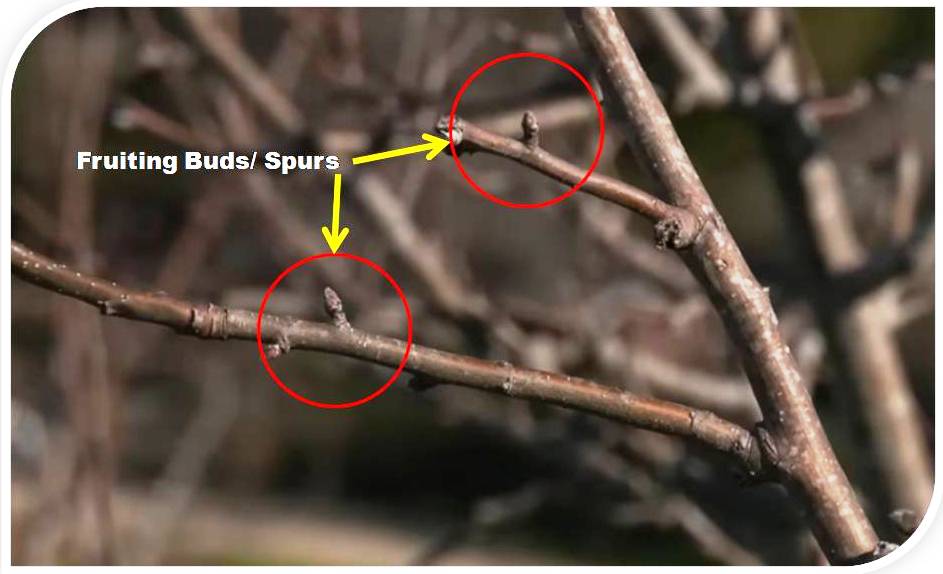
- Fruit Buds/ Spurs: These are plump, fat, round and protrude out from the stem.
- Two & three years old wood is thicker, brown to gray, old looking and has primarily fruit buds.
- The life of fruiting bud/ spur for producing quality fruit is 5 years.
- The spur renewal can be done after 5 years by cutting the old spur from the top.
TYPES OF PRUNING CUTS
Every cut respond differently in a tree.
1. HEAD & BEBEL CUT :
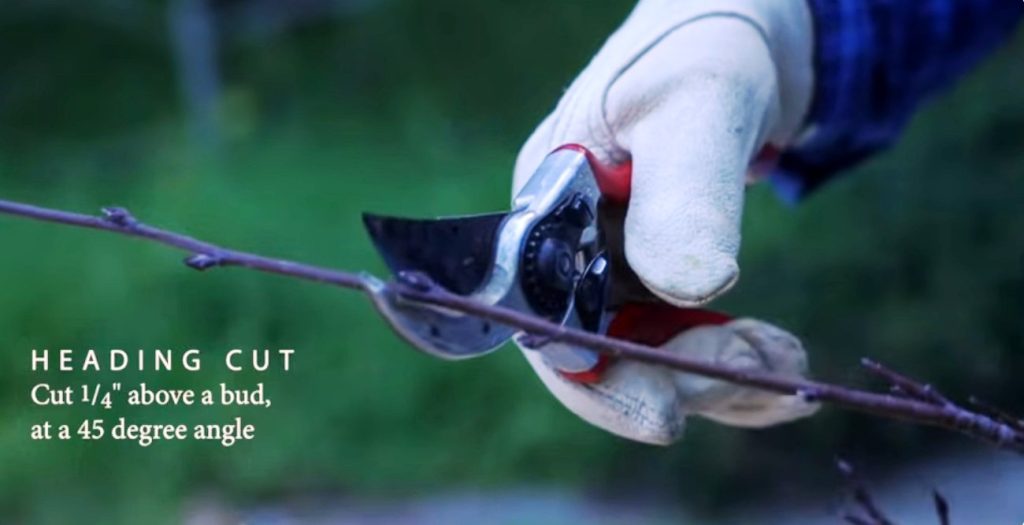
- This cut is made to stimulate the growth, made at more than 4 inch distance from base.
- Remove the head or top of a branch back to a bud (usually out ward facing) cut 1/4 inch above a bud. When cut is straight, it is called head cut and when it is at a 45 degree angle, it is known as Babel cut.
- It will stimulate all the buds behind and converts all into multiple branches. It is made near the weak branch for spur formation.
- The head cut should be avoided if the goal is to open up and thinning. Because, it encourages denser growth and prevent the centre of plant to enter light and air.
- Response :-
-
- The branch will regrow.
- More you cut the branch back, the stronger and longer the response will be.
- Thicken and strengthen the branch. It enables the branch to bear the weight of the wood and fruit.
- Makes the branch self supporting and mechanically strong.
- Induce the formation of fruit buds/ spurs.
-
2. THINING/ COLLAR CUT :
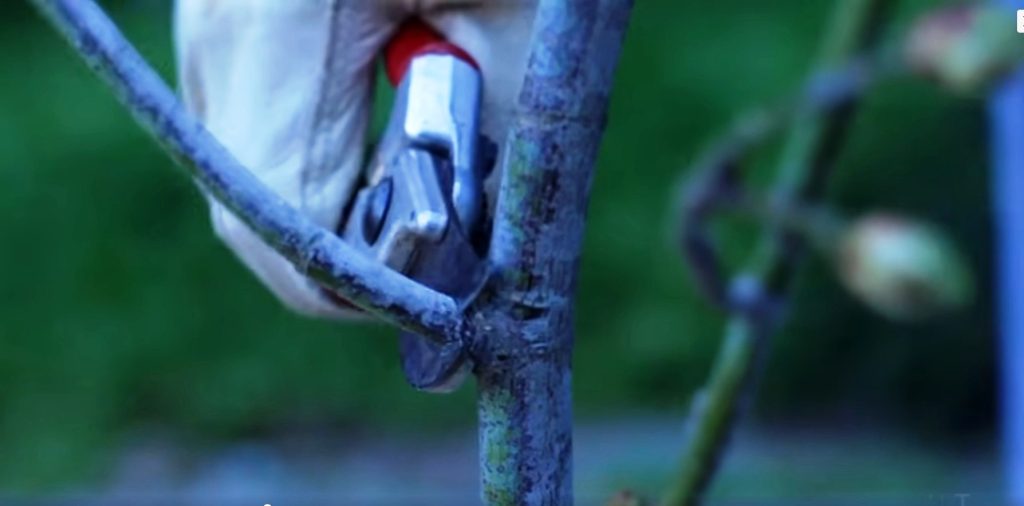
- Removal of whole branch leads to thinning a tree or shrub.
- It is used to remove the lateral from the base but near the collar. The cut below the collar may lead to increase the canker formation.
- Precaution:- Do not make the cut below the collar, because branch has special cells that can grow over and seal the cut and do not leave the stub on the collar because these special cell cannot grow over the stub and collar.
- Response :-
-
- Thinning cut by channelizing the energy to the main branch making it to grow longer and stronger.
- It opens up the plant to more light and air.
- Thinning cut make the lead branches intact, taller and wider.
-
3. RELEADERING CUT :
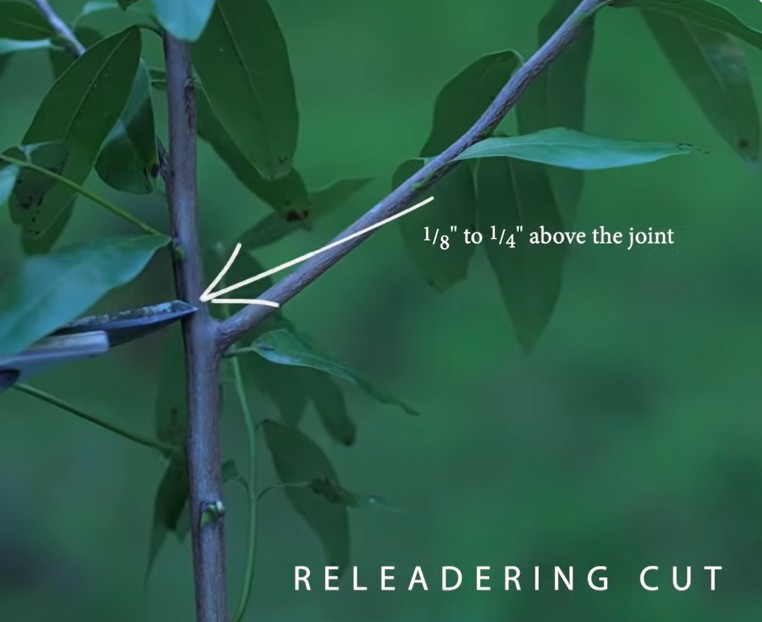
- Removal of portion of lead branch above the lateral, causing the lateral to become the new leader.
- To make this cut, place the shear 1/8 to 1/4 inch above, near the lateral branch and give the slant cut to the central leader. Care must be taken that the lateral should be at least 1/3rd thick than the main branch.
- Response :-
-
- Plant responds to the releadering cut by channelizing the energy to lateral branch to make main leader taller and stronger. It redirects the growth to a new leader branch, and can reduce the height of a tree or shrub.
- It reduces the height and width of the tree.
-
4. JUMP CUT :-
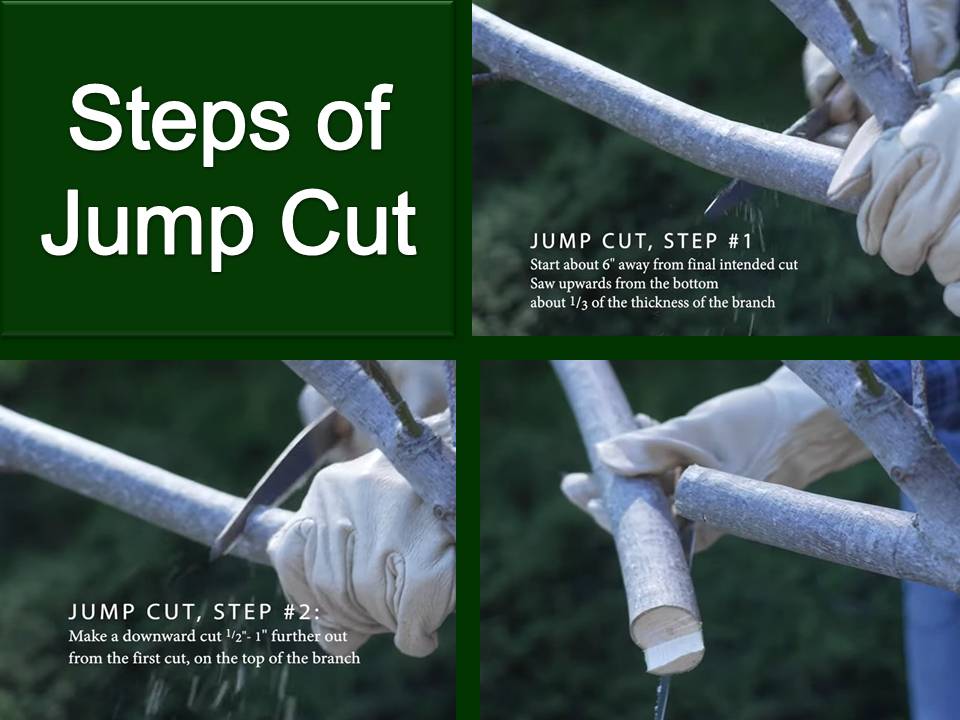
- Jump cut is actually series of 3 cuts:
-
- Step 1 is start about 6 inch away from final intended cut and about 1/2 to 1/3 into the branch;
- Step 2 is to make downward cut 1/2 inch to 1 inch further out from the first cut, on the top of the branch and
- Step 3 is cut the branch completely near the collar.
-
- Response :-
- Plant responds to the releadering cut by channelizing the energy.
- It reduce the weight of heavy branches before making a final cut, preventing tearing and injury.
- Jump Cut near the bud:- That bud will sprout and convert into branch.
5. STUB CUT :-
- Straight cut is made in the branch from 1/2 inch to 4 inch leaving 3-4 buds towards the base. This cut is use to check the growth of branch and increase the spur formation.
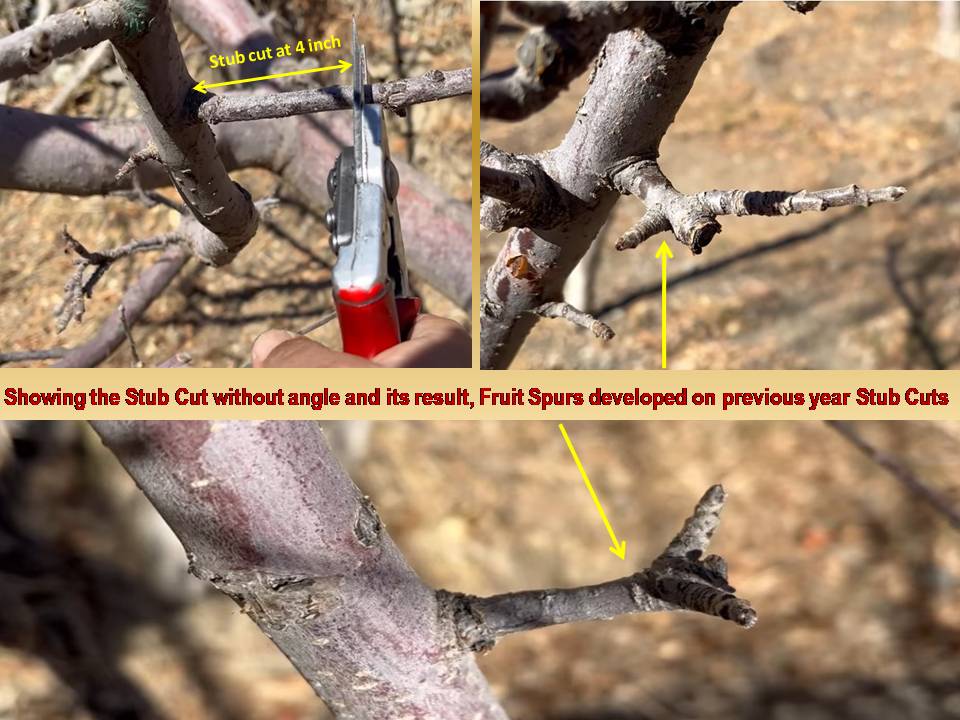
- Response :-
- It is used for spur formation on one year shoot.
- It prevents desiccation and die-back of the bud.
6. RING CUT :-
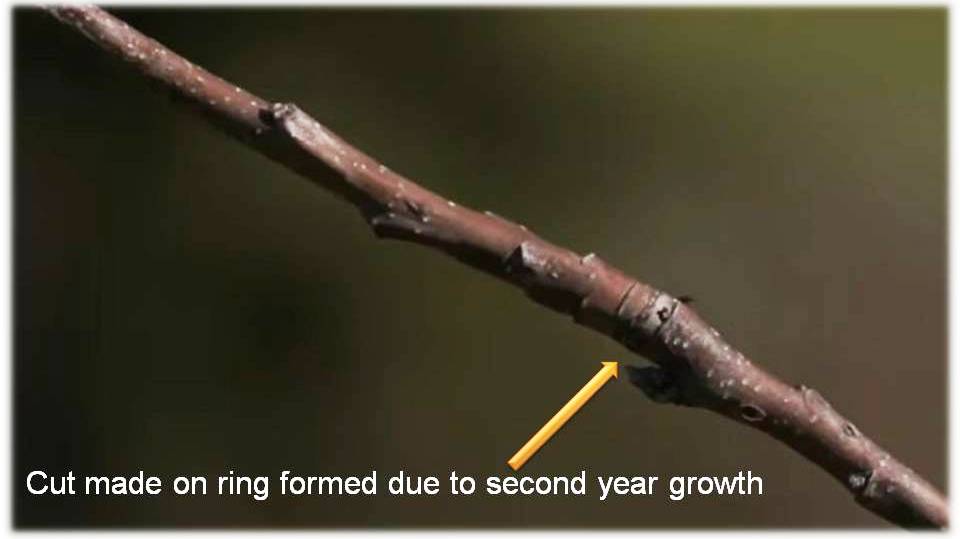
- When another shoot originates from or next to the first year growth, a ring is formed at the top of the first year growth, from where next growth starts, the cut made on this ring is known as Ring cut.
- Response :-
-
- It is helpful in increase the spur formation on previous year growth.
-
7. DUTCH CUT :-
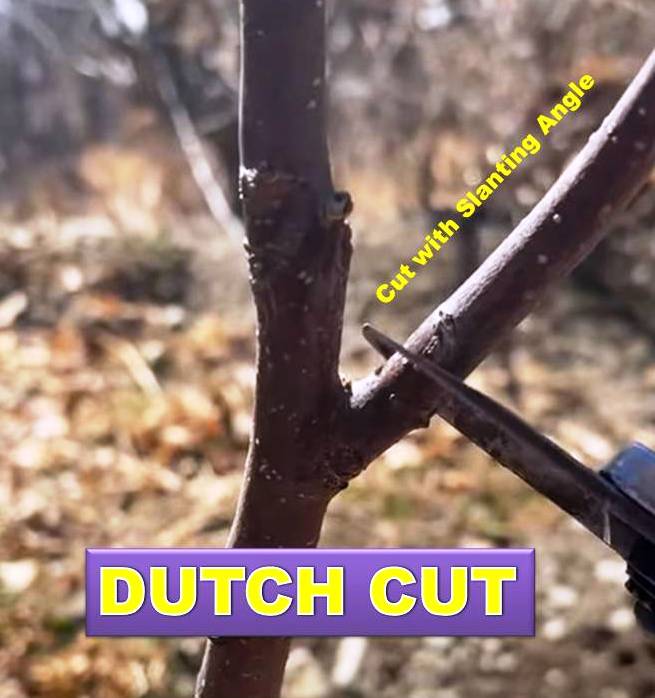
- It is done in young plants. When lateral is competing with main stem or crotch angle is less than 45 degree. Slant cut at the base of lateral branch, leaving a bud towards outward, which will sprout later at wide angle.
CLICK HERE to see the list of registered pruners in Himachal Pradesh